






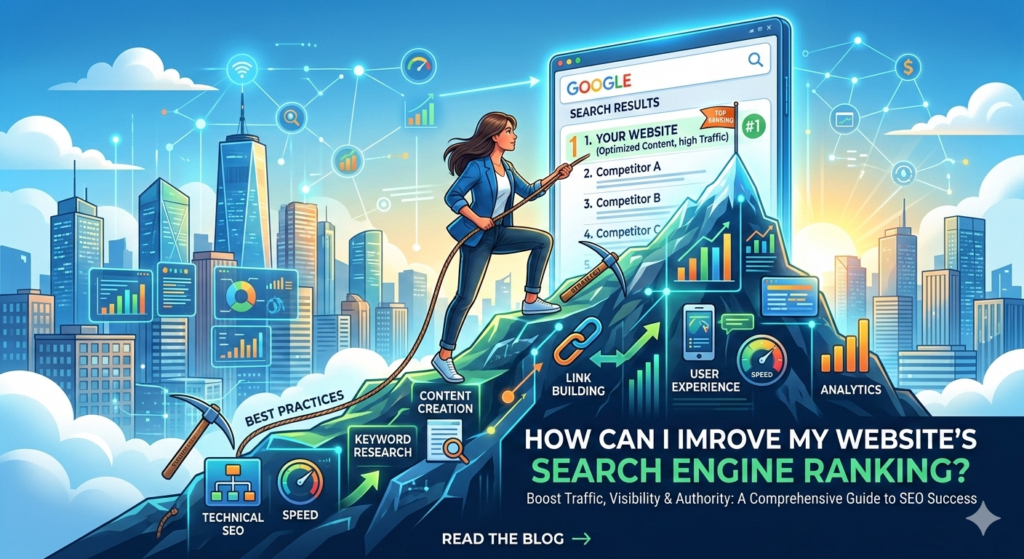
How Can I Improve My Website’s Search Engine Ranking?
If you run a small business, your website is often the first place potential customers find you.
But here’s the challenge: if your site isn’t showing up on the first page of Google, you’re missing out on valuable traffic, leads, and sales.
The good news?
Improving your search engine ranking doesn’t require a huge budget or technical expertise. With the right approach, you can boost your visibility and attract more customers.
Understanding SEO Basics
Search Engine Optimization (SEO) is the process of improving your website so it ranks higher in search results. When someone searches for a product or service you offer, you want your business to appear near the top.
SEO involves several key elements:
- Keywords: The words and phrases people type into search engines
- On-page SEO: Optimizing the content and structure of your website
- Off-page SEO: Building your site’s authority through backlinks and mentions from other websites
Getting these elements right helps search engines understand what your business does and why it deserves to rank well.
Practical Tips for Small Businesses
Keyword Research
Start by identifying the terms your customers are actually searching for.
Think about the questions they ask and the problems they need solving. Tools like Google’s Keyword Planner or free options like Ubersuggest can help you find relevant keywords with good search volume. Focus on local keywords too. “Plumber in Manchester” will bring you more relevant traffic than just “plumber.”
On-Page Optimization
Once you know your keywords, use them naturally throughout your website in page titles, meta descriptions, headings, image alt text, and body content. Avoid keyword stuffing. Write for humans first, search engines second.
Creating Quality Content
Content that genuinely helps your audience will always perform better. Answer common questions. Share your expertise. Provide real value. When visitors spend more time on your site and engage with your content, search engines notice. Consider adding a blog where you can regularly publish helpful articles related to your business.
Mobile Optimization
More than half of all web searches now happen on mobile devices. If your website doesn’t work well on smartphones, you’re losing customers and hurting your rankings. Make sure your site loads quickly, text is readable without zooming, and buttons are easy to tap.
Local SEO
For small businesses serving a local area, local SEO is crucial. Create and optimize your Google Business Profile, encourage satisfied customers to leave reviews, ensure your business name, address, and phone number are consistent across all online directories, and include your location in page titles and content.
Understanding GEO: The Future of Search
While SEO focuses on traditional search results, Generative Engine Optimization (GEO) is becoming increasingly important as AI-powered search tools reshape how people find information online.
GEO refers to optimizing your content so it appears in AI-generated search responses. Tools like ChatGPT, Google’s AI Overviews, and Microsoft’s Copilot now provide direct answers to user queries rather than just listing links. If your business information isn’t being picked up by these AI systems, you’re missing a growing segment of potential customers.

How GEO Differs from Traditional SEO
Traditional SEO aims to get your website ranked in search results. GEO focuses on getting your business information included within AI-generated answers. When someone asks an AI tool “What’s the best accountant near me?” you want your business to be mentioned in the response.
Practical GEO Strategies
Making your content AI-friendly involves several key practices:
Clear, Structured Information: AI tools prefer content that directly answers questions. Structure your website with clear headings, concise answers, and well-organized information. Use FAQ sections that address common customer queries.
Authoritative Content: AI systems prioritize credible sources. Demonstrate your expertise through detailed, accurate content. Include credentials, case studies, and real examples of your work.
Maintain Consistency: Ensure your business information is consistent across your website, Google Business Profile, social media, and industry directories. AI tools cross-reference multiple sources, and inconsistencies can harm your credibility.
Focus on Natural Language: People ask AI tools questions in conversational language. Instead of just targeting “emergency plumber London,” create content that answers “Who can fix my burst pipe tonight in London?”
Measuring Success
Use free tools like Google Analytics and Google Search Console to track your progress. Pay attention to:
- How much traffic you’re getting from search engines
- Which keywords are bringing visitors to your site
- How long people stay on your pages
- Whether traffic is converting into enquiries or sales
For GEO, monitoring is more challenging as AI-generated responses don’t always provide clear analytics. However, you can track branded searches and direct traffic increases, which often indicate your business is being mentioned in AI responses.
Take Action Today
Improving your search engine ranking and AI visibility takes time and consistent effort, but the results are worth it. Start with one or two areas from this guide and build from there. Every small improvement adds up.
The landscape of online search is evolving rapidly. While traditional SEO remains essential, forward-thinking small businesses are already adapting their strategies to include GEO. By optimizing for both, you’ll be well-positioned to capture customers however they choose to search.
If you’re feeling overwhelmed, remember that help is available. Many small businesses benefit from working with a digital marketing professional who can provide tailored guidance on both SEO and GEO strategies.
What search optimization challenges are you facing? Share your experiences in the comments, or get in touch if you’d like support making your website work harder for your business.